
Sunday, December 8, 2013
Goings on
New goings on at our affiliate blog www.harvestingathome.net where you can read all about our new book. That's right, a book, complete with all the bells and whistles! It has pages, and covers (both front and back), comes with pictures, text, and even a table of contents. Hard to beat all of that value packed into one little package! Anyway, go check out the new thing!


Monday, April 15, 2013
Shear Joy
 One of the things I have noticed is that the cultural distance from activities that were once commonplace in human society has resulted in a powerful mystification of otherwise mundane tasks. When we decided to harvest our own pigs last year, we found ourselves piercing through layers of mystery that have been erected between the average meat consumer and the source of their food. Butchering meat, once a household skill, is now arcane knowledge, kept by disciples in white lab coats who pass quietly behind swinging doors. What happens behind those doors? Who knows, certainly no one in polite society should like to find out - instead, we are content to be handed individually wrapped portions, developing our specific tastes and preferences with little to no consideration of the whole from which it comes. Even among those who raise pigs, harvesting and butchering is most commonly left to the professionals. When striking out on our own, we found that we were flying in the face of what is now conventional wisdom.
In the same manner, when I began this new venture of raising sheep, one of the tasks that every shepherd would have taken upon him or herself is the annual need to shear the woolies, ridding them of their thick fleeces in time for lambing season and the warming of spring. But, similar to changes in most other areas of agricultural life, when sheep raising moved from smallholdings to vast herds in corporate operations, tasks that would have been achievable by a small community were put into the hands of professionals and specialists. And now, even among smallholders, the instinct is most often to call a professional shearer (a profession growing more rare every year) to schedule a haircut for the sheep at what one hopes will be a reasonable price per head. For those wishing to try their own hand at it, the industrial model (using expensive mechanical shears) tends to maximize efficiency over the comfort of the animal - as a result, one gets the impression that the only good way to shear a sheep is to get it done as fast as possible.
 There are other ways to do this. Traditionally, shearing was done comfortably and peaceably using hand shears and some patience. The goal, rather than emphasize efficiency of time, is to work well with the animal and to get a quality fleece for fiber work later. Often these skills were learned on the job, under the watchful eye of a skilled shepherd, but in the Information Age, recommendations on tools and approaches are just a click away, and after research is done all that is left is to give it a try. There is an old Russian saying that translates: "Repetition is the mother of learning." - my aim was to learn to shear our own little flock, using the five sheep as five lessons in shearing.
My brother Alex had put me on to some hand shears that seemed like they would do the job right. They are called Jakoti Shears, and let me tell you, they are, as they say in the east, "wicked shaap", they are extremely comfortable to use, and they hold an edge like you wouldn't believe. Although they are made as garden shears, I would recommend them as a more than adequate tool for the task of shearing. They are manufactured in the UK but carried by several dealers in the US.
 I started first with the lambs, and began figuring this whole thing out. In some ways, it is just a haircut of sorts - but there are some tricks that make it work better for man and beast alike. In order to make shearing possible, the sheep is flopped onto their backside and leans against the legs of the shearer. In this position they are completely docile, even slipping towards sleep every once in awhile. What follows is a kind of greco-roman wrestling match, as the sheep is gently rolled around to different positions in order to get the angles best suited to cutting wool and not flesh. That distinction is harder to maintain than one would at first imagine - the wool is so dense, and the flesh so soft, that the line between them is sometimes difficult to discern by eye or even by touch. But there is a feel to the thing that develops in a short amount of time and though we had to administer some minor first aid care to the long-suffering sheep, no major cuts were inflicted.
 Keith and I worked our way through the first two lambs and our cutting technique began to improve. A week later I did two more yearlings, and got pretty decent looking fleeces off both. And finally, I turned my attention to "Mama", our bred ewe (due in June), with her impressive shaggy coat. The lambs were easy to move around, but Mama was a different story. Just getting her in the shed and onto the working platform we built was a challenge and it made me think about what kind of system we would need to develop next year when our flock was more fully grown. But eventually she and I worked things out and she sat back and relaxed for her trim. Thirty minutes later, she emerged with a daring new look, and I was able to take some pride in a beautiful and intact fleece.
 The fleeces are getting washed, then the plan is to send them off to a local fiber mill for processing. Our plan is to get a bunch of yarn back and put them to use in some knitting projects, that kind of thing. Hopefully we'll have a lot to work with, and can hand some out to talented knitters and see what they can do! Meanwhile, lambing season approaches and all the new learning that will come with it - Mama is ready, now, for an easy time of it with her new, sleek spring outfit. The curtain has been pulled back, the great and powerful Oz has been exposed - shearing is a task well within the grasp of any that would care to learn to do it. For me, there was a recognition that this ritual, a Scotsman shearing his sheep, has been repeated countless times through the ages - and I am glad to continue on in the tradition.
 Sunday, March 3, 2013
For Pet or Dinner
It was possibly the worst Craigslist ad I have ever seen.
It read, simply: "Lambs: For Pet or Dinner. $50."
A stock picture of some sheep, no contact information save a generic craigslist reply. It looked bad.

My partner in crime at the farm is my friend Keith. He e-mailed me the ad, along with some skeptical side comments. The Yakima Valley has some pretty sketchy farm outfits, and unfortunately that sometimes means that you see livestock dumped on the internet, oftentimes they come in questionable health and are raised in even more questionable conditions. We had been keeping our eyes out for some sheep in order to start up a small flock that we want to keep at the farm - this didn't seem like a very likely answer to our hopes.
But still....it was worth at least a reply e-mail right? So I shot off an e-mail that had a couple of questions in it and my phone number. An hour later I got a call and all concerns were laid aside. We had hit the jackpot.

I'm grateful that the owner of these beautiful sheep had asked her adult son to place a craiglist ad for the sheep....and I'm grateful that he put almost no effort or thought into it. What we found was an absolutely beautiful farm home to absolutely beautiful sheep - 60 head of Cormo, which were managed for their wool. The lambs were 8 months old or so, in perfect condition. It didn't take much chatting to find that the owner was more than happy to be selling the sheep to some young families with an interest in getting started and soon we were talking about what we would be able to take home.
We ended up agreeing on four sheep - three lambs (2 ewes and a wether) and a pregnant ewe that was due in June. This would give us a nice starter flock to work with. I put money down on the spot and arranged to pick up the sheep later in the week, giving us time to get the farm ready for their arrival. We had a couple of fencing issues to address, a shelter shed to get ready (the resident horse had moved out several months earlier) and a few other sundry details to attend to. When we arrived to pick up the sheep, the owner gave us an additional ewe as a "bonus"....and so we came home with five beautiful, wooly creatures.
We were told it would take a little while for them to warm up to us. It took about 4 hours and a handful of grain. The sheep are a fantastic addition to the farm - they seem to love their new accommodations, they follow us around as we work, and their wooly fleeces hold the promise of all kinds of projects in the year to come. In just a few months we will happily add more to their number as the pregnant ewe delivers at least one (maybe two!) little ones to add to the happy crew.
So, this MacLeod is standing in the footsteps of his ancestors. A tender of flocks, a mender of fences, and a shoveler of #*@!. All transferable skills. Say hello to the golden parachute - it's a woolen parachute, which means it still insulates, even when wet. Just be careful how you wash it.
 |
| Chewy - our wether. |
 |
| Lily - the shy one. |
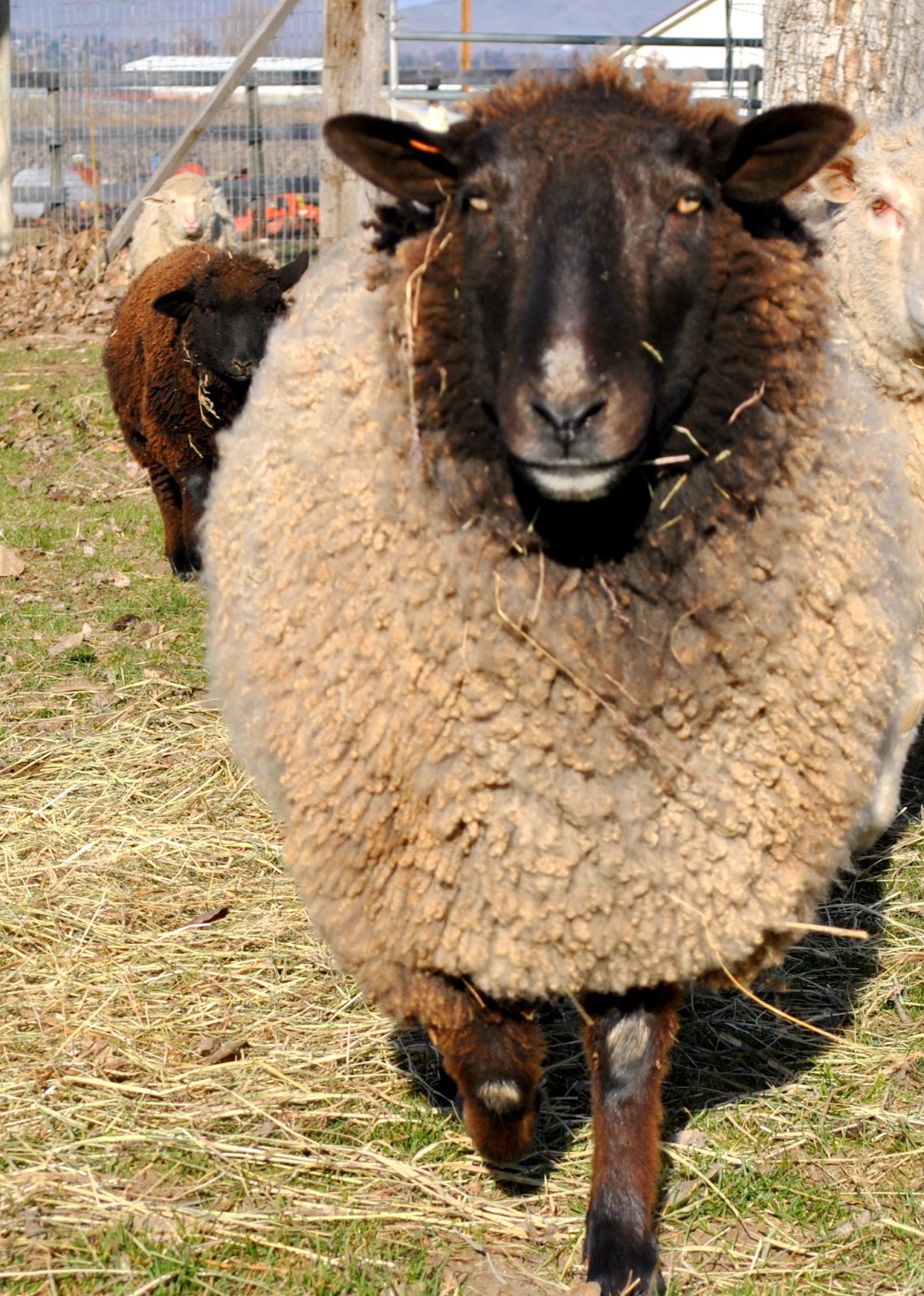 |
| Mama - bringin' the babies. |
 |
| Cuddles - truly tame. |
 |
| Cocoa - our bonus lamb. |
Friday, November 30, 2012
Bringing Home the Bacon
 We recently came into a significant inheritance of sorts - about 200lbs of pork resulting from the harvest of the pigs we raised this past year. Some of that meat comes in ready-made and recognizable cuts that can be used immediately in the kitchen. Others portions invite additional processing in order to bring out the best. What follows are a couple of our recent adventures in curing and smoking.
 When a pig is harvested, one of the biggest tasks is to get all of that meat packaged and stored. Most of it can be vacuum sealed and stored in a freezer until ready to use (one of the great conveniences of pursuing an old task in a modern age). But other cuts can be preserved using other methods, like curing, which will not only save freezer space but will also produce some of the very tastiest stuff we associate with the noble pig. The primary text I've been using as a guide to this process is Ruhlman and Polcyn's Charcuterie: The Craft of Salting, Smoking, and Curing
The belly is one of those cuts that benefits greatly from various cure treatments. These large slabs are a wondrous mix of tender meat and silky fat and it is here that we look for bacon. Yes, bacon....take a moment if you need to. This past year the world did a collective shudder as it contemplated the mere possibility of a bacon shortage - a truly terrible thing to consider. To transform the fresh pork into salty, smokey goodness, a slab of belly is first covered with a cure. This is a mix of salt, sugar, spices, and often (though not always) some special curing agents that protect the meat from developing certain kinds of dangerous bacteria. The meat is then put into a large ziplock bag and placed in the fridge, where it sits in the resulting brine that leaches out. After a week and a bit, the slab is removed and rinsed off, then allowed to dry in a fridge for about 24 hours - this preps the meat for smoking.

I prepared four large slabs of belly in basically this manner, although one slab was destined for the garage rather than the smoker (it being turned in to pancetta, the subject of a future post). When ready, they were put into the smoker and cold-smoked for several hours over smoldering applewood chips, then transferred to the oven where they were cooked to an internal temperature of 150F. Voila! Bacon! We now have more bacon that I know what to do with.....well....actually, I'm pretty sure of what to do with it.

 Another great cut for curing is the ham. This comes from the hind leg quarters and can be a large cut. This can be cured in several ways, some roads leading to tender, sweet ham, other, longer journeys resulting in prosciutto. I decided to debone our hams and then submerged them in a brine for about two weeks. They sat out in our garage, protected by salty brine and cool temperatures, as they underwent a flavorful transformation. After this, they, too, sat uncovered in the fridge to dry, then off to the smoker where they were exposed to applewood smoke for about 5 hours. We finished them in the oven to 150F. These hams make a fantastic feature for a big meal, the smoke flavor is superb. You can also put them through a slicer, particularly convenient because they are boneless, and turn out your own packages of deli meat.
 The quality of the product that can be produced in your own kitchen is really astounding. The flavors are amazing - this is work that pays dividends on the time and attention given to it. We are now able to find quality deli meats and gourmet bacon a few steps away from the kitchen, tucked safely in the freezer. And bacon and ham are just the tip of the porkberg, so to speak. Pancetta and guanciale are curing in the garage, developing character and flavor. After those, there will be time to try our hand at sausage making, a product that can also benefit from salt, cure, and smoke. The pigs just keep on giving! Stay tuned for more charcuterie updates as time works its magic!
Monday, November 12, 2012
The End is the Beginning
Autumn arrived in a hurry. In a matter of
days the temperature, which had been unseasonably temperate, plunged into
refrigeration range. Leaves began to fall with frantic intention, and the
sky became gray and troubled. It was time for the harvest.
WARNING: WHAT FOLLOWS IS A DETAILED
DESCRIPTION OF THE HARVEST OF FOUR BEAUTIFUL AND BOUNTIFUL PIGS. THE
CONTENT MAY BE OBJECTIONABLE TO SOME - IF YOU ARE NOT OF A MIND TO VIEW SUCH
CONTENT, PLEASE DO NOT SCROLL DOWN. THE DESCRIPTIONS AND PHOTOS ARE OF A GRAPHIC
NATURE AND ARE INTENDED TO HELP INFORM OTHERS ABOUT HUMANE PROCESSES AND
PRACTICES RELATED TO SMALL-SCALE MEAT PRODUCTION.
If you are not interested in the rest of the
post, enjoy this picture of our beautiful pigs enjoying a perfect fall day in the
Yakima valley (along with their chicken friends). For the rest of the
post, continue scrolling down.

 If you are still reading, I will assume that you
are along for the whole ride. The harvest day was so long anticipated,
fretted over, planned and plotted that it seemed strange to see it finally
arrive. Our hogs had grown a great deal. From their small andbutton-cute beginnings back in May, they ballooned to great size and even
greater appetite. We fed them hundreds of pounds of apples and pumpkins
over the last several weeks (even getting them a little sloshed on occasion on
account of fermented apples).
If you are still reading, I will assume that you
are along for the whole ride. The harvest day was so long anticipated,
fretted over, planned and plotted that it seemed strange to see it finally
arrive. Our hogs had grown a great deal. From their small andbutton-cute beginnings back in May, they ballooned to great size and even
greater appetite. We fed them hundreds of pounds of apples and pumpkins
over the last several weeks (even getting them a little sloshed on occasion on
account of fermented apples). 
Our plan was to do the whole harvest ourselves,
from start to finish, slaughter to freezer. In preparation of this my
brother and I did some training at a seminar of sorts put on by the good folks
at Farmstead Meatsmith. My partner in crime, Keith, sketched and salvaged
and sparked together steel structures necessary for the tasks ahead.
Knives were sharpened, equipment gathered, volunteers recruited - until
in the end there was nothing left but the task itself.
 Harvesting hogs in a traditional manner takes
several steps: 1) the kill; 2) scald & scrape; 3) evisceration; 4)
butchering (portioning). Each step has some special tools and set-up to
accomplish, and all steps benefit from a lot of helping hands. In this
way the process has built into it the potential for a community that gathers
around the shared labor.
Harvesting hogs in a traditional manner takes
several steps: 1) the kill; 2) scald & scrape; 3) evisceration; 4)
butchering (portioning). Each step has some special tools and set-up to
accomplish, and all steps benefit from a lot of helping hands. In this
way the process has built into it the potential for a community that gathers
around the shared labor.
THE KILL
 After spending the last five months caring for
these beautiful creatures, Keith and I spent a great deal of time thinking
about this moment. We were greatly invested in making sure the kill
happened in the most humane manner possible. As with so much of traditional
harvesting, pursuing excellence in this arena is not only an ethical
consideration but is also a practical one, as stressed animals can potentially
taint the meat.
After spending the last five months caring for
these beautiful creatures, Keith and I spent a great deal of time thinking
about this moment. We were greatly invested in making sure the kill
happened in the most humane manner possible. As with so much of traditional
harvesting, pursuing excellence in this arena is not only an ethical
consideration but is also a practical one, as stressed animals can potentially
taint the meat. 
The ethical and the practical are inextricably
intertwined, a connection that becomes immediately apparent when the caretaker
is also the executioner. Our contemporary food systems sever this
connection, and we become detached consumers, not invested in the care of the
animals nor confronted with their death. For some, the moment of the kill
is the hardest to imagine participating in - for us, we could not imagine
handing the task over to anyone else.

 The pigs were killed in the paddock that they
called home. They were given a meal of cracked corn and apples which they
attended to with great enthusiasm. Keith then lined up a shot with a .22
rifle at point blank range. The target is a specific spot on the front of
the head, taking advantage of a thin spot in the otherwise impenetrable skull
plate. The shot renders the pig senseless - immediately after the shot a
small team rushes in to accomplish two important tasks. The first is to
"stick" the pig, a knife is inserted at the base of the neck, angled
up to nick the main arteries and create an impressive flow of blood.
The pigs were killed in the paddock that they
called home. They were given a meal of cracked corn and apples which they
attended to with great enthusiasm. Keith then lined up a shot with a .22
rifle at point blank range. The target is a specific spot on the front of
the head, taking advantage of a thin spot in the otherwise impenetrable skull
plate. The shot renders the pig senseless - immediately after the shot a
small team rushes in to accomplish two important tasks. The first is to
"stick" the pig, a knife is inserted at the base of the neck, angled
up to nick the main arteries and create an impressive flow of blood. 
This blood is collected as it flows, possessing
unique culinary potential. It must be whisked continuously while it cools
to avoid turning to one large clot as it hits oxygen. After cooling it is
filtered into jars and refrigerated, so it can be used for blood sausage.
Collecting the blood is a part of the commitment to make the most efficient and
total use of the animal, an ethos that flows naturally from investment of time,
energy and emotion required to raise them. It is one of the most fetching
qualities of the pig - it is almost totally useful as food. Fergus Henderson's "The Whole
Beast: Nose to Tail Eating" is a marvelous introduction
to the odd bits that your local butcher may have neglected to tell you about.

SCALD & SCRAPE:

 After the kill and blood collection the pig is scrubbed relatively
clean and then cuts are made at all four feet to open up access to some
amazingly strong tendons that will be used to hang the carcass during many of
the processes that follow. What follows next is sort of a watershed event
in the harvest process. There are two schools of thought on preparing the
carcass for butchering - to skin or to scald, that is the question. We
opted for the more traditional and certainly more labor intensive scald and
scrape, which entails dipping the entire carcass into 145 degree water for 5
minutes and then scraping the hair and top layer of skin off of the entire
carcass, nose to tail. The result is a clean tough surface which is very
easy to handle during transfer and butchering, since the skin remains intact.
But the process requires a tank large enough to handle a 380lb hog (that
was the size of our largest) and a means of raising and lowering the animal.
After the kill and blood collection the pig is scrubbed relatively
clean and then cuts are made at all four feet to open up access to some
amazingly strong tendons that will be used to hang the carcass during many of
the processes that follow. What follows next is sort of a watershed event
in the harvest process. There are two schools of thought on preparing the
carcass for butchering - to skin or to scald, that is the question. We
opted for the more traditional and certainly more labor intensive scald and
scrape, which entails dipping the entire carcass into 145 degree water for 5
minutes and then scraping the hair and top layer of skin off of the entire
carcass, nose to tail. The result is a clean tough surface which is very
easy to handle during transfer and butchering, since the skin remains intact.
But the process requires a tank large enough to handle a 380lb hog (that
was the size of our largest) and a means of raising and lowering the animal.
 Keith scavenged an old water tank that we
estimate had a total volume of about 110 gallons. Being handy with a
plasma torch and welder, he was able to create a truly deluxe scalding tank,
complete with removable lid and a ball-valve for draining the tank at the end
of the day. A little bit of paint to cover up the rust and our tank was
ready for action. Keith is also handy with a fork lift, which had more
than enough capacity to handle the big job we were throwing at it. The
lift allowed us to easily transfer the pigs, hung on gambrels, to the tank for
scalding and to the large metal frame that Keith constructed to hold the completed
sides. Did I mention Keith was handy?
Keith scavenged an old water tank that we
estimate had a total volume of about 110 gallons. Being handy with a
plasma torch and welder, he was able to create a truly deluxe scalding tank,
complete with removable lid and a ball-valve for draining the tank at the end
of the day. A little bit of paint to cover up the rust and our tank was
ready for action. Keith is also handy with a fork lift, which had more
than enough capacity to handle the big job we were throwing at it. The
lift allowed us to easily transfer the pigs, hung on gambrels, to the tank for
scalding and to the large metal frame that Keith constructed to hold the completed
sides. Did I mention Keith was handy? The water temp is extremely important to achieve
the best scald. A precise 145 degrees for exactly 5 minutes - there are
undoubtedly many other opinions and practices related to scalding, we found
that the formula above achieved the very best results. Mistakes made here
create difficulties later, so taking time to get it right is important.
One half of the carcass is scalded at a time, and when it comes out of
the tank after it's soak the work must be completed at a brisk pace. The
scurf (the layer of skin that gets removed) gets scraped off, a task made
easier by a unique tool called a bell scraper. Three or four people
working quickly can scrape the half down in about 25 minutes, then the pig is
flipped and the other half is done. Final touch-ups can be done with
razor-sharp knives, leaving the skin as smooth as possible.
The water temp is extremely important to achieve
the best scald. A precise 145 degrees for exactly 5 minutes - there are
undoubtedly many other opinions and practices related to scalding, we found
that the formula above achieved the very best results. Mistakes made here
create difficulties later, so taking time to get it right is important.
One half of the carcass is scalded at a time, and when it comes out of
the tank after it's soak the work must be completed at a brisk pace. The
scurf (the layer of skin that gets removed) gets scraped off, a task made
easier by a unique tool called a bell scraper. Three or four people
working quickly can scrape the half down in about 25 minutes, then the pig is
flipped and the other half is done. Final touch-ups can be done with
razor-sharp knives, leaving the skin as smooth as possible.
 After this the head is removed and taken away to
be cleaned up properly. There are a lot of flaps and folds on the head
that have to be attended to with razor and knife in order to render the head
ready for roasting or carving. The carcass is then transferred to the
evisceration area for the next steps.
After this the head is removed and taken away to
be cleaned up properly. There are a lot of flaps and folds on the head
that have to be attended to with razor and knife in order to render the head
ready for roasting or carving. The carcass is then transferred to the
evisceration area for the next steps.
EVISCERATION:
 Next the carcasses are opened up, using knife
and saw, in order to remove the insides and divide the carcass into halves.
This is detail work requiring a steady hand - one nicked intestine can
create a micro-biological mess of your meat. Better to proceed slowly and
carefully than deal with clean-up protocols. We took few pictures of this
process - but it was attended to by my brother Alex and friend Charmaine, who
carefully divided the carcasses, harvesting all the usable bits from inside,
including heart, livers, caul fat, etc.. The rest of the insides where
bagged for disposal. What results are clean "sides" of pork,
looking an awful lot like meat - real, honest to goodness meat. But that
meat needs to be chilled before being portioned into more usable cuts suitable
for a family to make use of throughout a year. This is conveniently
accomplished by leaving the sides hanging outdoors overnight, when the
temperatures will drop into the upper 20's, chilling the meat to the bone and
firming up the skin and fat.
Next the carcasses are opened up, using knife
and saw, in order to remove the insides and divide the carcass into halves.
This is detail work requiring a steady hand - one nicked intestine can
create a micro-biological mess of your meat. Better to proceed slowly and
carefully than deal with clean-up protocols. We took few pictures of this
process - but it was attended to by my brother Alex and friend Charmaine, who
carefully divided the carcasses, harvesting all the usable bits from inside,
including heart, livers, caul fat, etc.. The rest of the insides where
bagged for disposal. What results are clean "sides" of pork,
looking an awful lot like meat - real, honest to goodness meat. But that
meat needs to be chilled before being portioned into more usable cuts suitable
for a family to make use of throughout a year. This is conveniently
accomplished by leaving the sides hanging outdoors overnight, when the
temperatures will drop into the upper 20's, chilling the meat to the bone and
firming up the skin and fat.
The frame that Keith fabricated using scrap
metal was a structure of extreme utility, accommodating all eight sides with
ease. A light dusting of snow greeted us the next morning when we arrived
to pack up the sides and take them to Keith's shop for butchering.
BUTCHERING:

 There is a great deal of mystery surrounding the
butchering of meat. At grocery stores, technicians in white lab coats
pass to and fro through opaque doors, bringing out trays of portioned and
plastic-wrapped meat marked with a barcode. What goes on back there?
We usually aren't given much access to that part of our food production,
so it is easy to imagine that a great range of technical skills and specialty
tools are required to transform sides of beef, pork, or lamb into usable cuts
of meat. This is not the case. Traditional butchering utilizes a
few simple tools, consisting of a small selection of knives, a cleaver, bone
saw, bone scraper and cutting boards. That's it. By no means do I
intend here to denigrate the butcher's craft - far from it. One thing
that you learn when taking on this task for oneself is that there are cuts in
the meat that require skill and understanding that are the result of long
training and practice. Yet the harvest of a family hog used to be
realistically in the realm of household competencies and a little imagination,
optimism, and a couple of sharp knives can fully equip you for the job of side
butchery.
There is a great deal of mystery surrounding the
butchering of meat. At grocery stores, technicians in white lab coats
pass to and fro through opaque doors, bringing out trays of portioned and
plastic-wrapped meat marked with a barcode. What goes on back there?
We usually aren't given much access to that part of our food production,
so it is easy to imagine that a great range of technical skills and specialty
tools are required to transform sides of beef, pork, or lamb into usable cuts
of meat. This is not the case. Traditional butchering utilizes a
few simple tools, consisting of a small selection of knives, a cleaver, bone
saw, bone scraper and cutting boards. That's it. By no means do I
intend here to denigrate the butcher's craft - far from it. One thing
that you learn when taking on this task for oneself is that there are cuts in
the meat that require skill and understanding that are the result of long
training and practice. Yet the harvest of a family hog used to be
realistically in the realm of household competencies and a little imagination,
optimism, and a couple of sharp knives can fully equip you for the job of side
butchery.

POSTLUDE:
The whole process is a big work, as one might
expect. But it is deeply satisfying work. We have found that our
respect and appreciation for our animals has grown, as has our sense of
confidence in our own ability to gain some control over the ways and means of
acquiring the food that we feed ourselves, our families, and our community.
The experience of the death/harvest side of the cycle leads one to long
for the birth/nurture side of things, and the mind races forward to spring,
when young pigs will once again populate their big yard at the farm. And
so the end is the beginning of more plans, more dinners, more food adventures,
more farm ambitions, and, of course, more blog posts!
A special thanks to: Keith, Alex, Charmaine,
Trent, Nate P., Gabe, Bob, and Nate H.

Saturday, October 20, 2012
Primal Cuts
This past Friday I traveled to the far reaches of Whidbey Island, located in the Puget Sound, to take part in an instructional class of a unique kind. A small number of participants gathered for several days of shared work, taking two pigs from the host farm through the entire process of harvest. Our own pigs are fast nearing their harvest date, so this was a timely opportunity to gain critical experience.
WARNING: WHAT FOLLOWS IS A POST THAT DESCRIBES THE DIVIDING OF A PIG CARCASS INTO USEFUL PORTIONS OF MEAT MEANT FOR CONSUMPTION. THERE WILL BE PICTURES. IF THIS TOPIC OR THESE PICTURES PROMISE TO BE OFFENSIVE TO YOU, PLEASE DO NOT READ THEM. INSTEAD, ENJOY THIS PICTURE OF THE MUKILTEO-CLINTON FERRY IN THE RAIN. TO CONTINUE READING THE POST, SIMPLY SCROLL ON DOWN.

The class was hosted by the crew at Farmstead Meatsmith. I have been lurking on their website for the better part of this past year, trying to glean from the excellent and beautiful instructional videos some of the techniques we would need to put to use as we eventually come to the task with our own animals. Apart from the very practical discussion, you also end up getting a look at some recipes and food treatments that make it clear that those folks are foodies as well as butchers and abattoirs. And they weave in some of their philosophical commitments that undergird their choice to get this personal with their food experience. It is no small vision; more than an economic argument and bigger than a nostalgic look back to days past, there is a commitment to community life, to hospitality, to stewardship and to generosity. The commitment to these values goes beyond a claim on them as the niceties of society - they are seen as vital, necessary, needful....I would say even strategic. By that, I mean that members of a community practice these values as a way to pursue their ability to survive and thrive - and so the whole interdependent community around them does as well.
That may all sound a bit high-minded for a class on butchering a pig. But our connections to one another, our connections to food and to the animals that we take it from, to the land that we take it from - these connections have all been weakened in our contemporary culture of commoditization. The plastic wrapped packages of meat we buy in the store, or the neatly arranged piles of fruits or vegetables soaking under the misters in the produce aisle, these are far removed from their places and processes of origin. Regaining a connection to our food is a way to not only regain control over the quality and economics of our food, but also a way to explore the reforging of those connective paths between our food and each other.
 And now, here is a picture of a philosophical butcher in training - my brother Alex.
Alex is a shareholder in our little herd of pigs and so is also preparing for the big day. He participated in all three days of the class, which covered topics like slaughter and evisceration, butchery and meat curing. He also managed to harvest a deer while on the Island, a timely accomplishment considering the number of cutting boards, knives and other processing tools located at the farm site.
 Our instructor was Brandon Sheard, who led us through the steps to take full sides of pork and transform them into usable cuts of meat. The pigs had been processed the day before, so when I arrived on Friday they were already cleaned, divided, and chilled - what was left were four sides of pork. Alex and I had one side to work with between us, and we first divided it into quarters (two shoulders, loin and side).
 All of the traditional pork cuts that you might find in the grocery store can be found in these quarters, and there are some non-traditional cuts hiding in there as well. What becomes abundantly evident early on is just how much food one pig can produce for a family or community. Brandon made a comparison to "loaves and fishes"....with each cut, the food seems to multiply. This abundance is part of what invites and encourages hospitality surrounding the harvest.
That hospitality was well-modeled by our host site - a picturesque farm property hidden in the deep forests of Whidbey Island, the host family provided a beautiful locale for the class. It is hard to express just how warm the reception was - not only did we accomplish the butchering in the comfort of a large kitchen setting, we were treated to food and drink at every turn. Homemade cheese, pickled beets and beans, spicy garden salsa, even some very local spirit distilled from apples and aged in oak.

 Our quarters turned slowly, cut by cut, into pork chops, tenderloin, boston butt, picnic roasts, leaf fat, back fat and, of course, bacon. Or at least, belly, which would eventually turn into bacon. Or cured into pancetta. Or roasted into delicious. That's the thing, there are so many possibilities, one side is 150 lbs of potential - a foodie's mother lode.
The instruction was very useful, the best kind of hands-on work that I needed to feel more confident as we approach our big harvest day. The experience gained will help insure that our own pigs' life ends in as humane and respectful way as they have lived, and that we are able to maximize the ways in which our family...and our community....will be able to benefit by that gift.
WARNING: WHAT FOLLOWS IS A POST THAT DESCRIBES THE DIVIDING OF A PIG CARCASS INTO USEFUL PORTIONS OF MEAT MEANT FOR CONSUMPTION. THERE WILL BE PICTURES. IF THIS TOPIC OR THESE PICTURES PROMISE TO BE OFFENSIVE TO YOU, PLEASE DO NOT READ THEM. INSTEAD, ENJOY THIS PICTURE OF THE MUKILTEO-CLINTON FERRY IN THE RAIN. TO CONTINUE READING THE POST, SIMPLY SCROLL ON DOWN.
The class was hosted by the crew at Farmstead Meatsmith. I have been lurking on their website for the better part of this past year, trying to glean from the excellent and beautiful instructional videos some of the techniques we would need to put to use as we eventually come to the task with our own animals. Apart from the very practical discussion, you also end up getting a look at some recipes and food treatments that make it clear that those folks are foodies as well as butchers and abattoirs. And they weave in some of their philosophical commitments that undergird their choice to get this personal with their food experience. It is no small vision; more than an economic argument and bigger than a nostalgic look back to days past, there is a commitment to community life, to hospitality, to stewardship and to generosity. The commitment to these values goes beyond a claim on them as the niceties of society - they are seen as vital, necessary, needful....I would say even strategic. By that, I mean that members of a community practice these values as a way to pursue their ability to survive and thrive - and so the whole interdependent community around them does as well.
That may all sound a bit high-minded for a class on butchering a pig. But our connections to one another, our connections to food and to the animals that we take it from, to the land that we take it from - these connections have all been weakened in our contemporary culture of commoditization. The plastic wrapped packages of meat we buy in the store, or the neatly arranged piles of fruits or vegetables soaking under the misters in the produce aisle, these are far removed from their places and processes of origin. Regaining a connection to our food is a way to not only regain control over the quality and economics of our food, but also a way to explore the reforging of those connective paths between our food and each other.
Alex is a shareholder in our little herd of pigs and so is also preparing for the big day. He participated in all three days of the class, which covered topics like slaughter and evisceration, butchery and meat curing. He also managed to harvest a deer while on the Island, a timely accomplishment considering the number of cutting boards, knives and other processing tools located at the farm site.
Our instructor was Brandon Sheard, who led us through the steps to take full sides of pork and transform them into usable cuts of meat. The pigs had been processed the day before, so when I arrived on Friday they were already cleaned, divided, and chilled - what was left were four sides of pork. Alex and I had one side to work with between us, and we first divided it into quarters (two shoulders, loin and side).All of the traditional pork cuts that you might find in the grocery store can be found in these quarters, and there are some non-traditional cuts hiding in there as well. What becomes abundantly evident early on is just how much food one pig can produce for a family or community. Brandon made a comparison to "loaves and fishes"....with each cut, the food seems to multiply. This abundance is part of what invites and encourages hospitality surrounding the harvest.That hospitality was well-modeled by our host site - a picturesque farm property hidden in the deep forests of Whidbey Island, the host family provided a beautiful locale for the class. It is hard to express just how warm the reception was - not only did we accomplish the butchering in the comfort of a large kitchen setting, we were treated to food and drink at every turn. Homemade cheese, pickled beets and beans, spicy garden salsa, even some very local spirit distilled from apples and aged in oak.
Our quarters turned slowly, cut by cut, into pork chops, tenderloin, boston butt, picnic roasts, leaf fat, back fat and, of course, bacon. Or at least, belly, which would eventually turn into bacon. Or cured into pancetta. Or roasted into delicious. That's the thing, there are so many possibilities, one side is 150 lbs of potential - a foodie's mother lode.The instruction was very useful, the best kind of hands-on work that I needed to feel more confident as we approach our big harvest day. The experience gained will help insure that our own pigs' life ends in as humane and respectful way as they have lived, and that we are able to maximize the ways in which our family...and our community....will be able to benefit by that gift.
Subscribe to:
Posts (Atom)